Melanoma Detection & Treatment in 535 Miller Ave
Mill Valley, CA 94941
Melanoma is the most serious form of skin cancer, but when it is found and treated early, it is highly curable. At Aesthetic Dermatology And Skin Cancer, Inc., board-certified dermatologist and Mohs surgeon Dr. Stefan Lowenstein provides thorough skin exams, careful evaluation of suspicious moles, and prompt diagnosis and treatment of melanoma.
What Is Melanoma?
Melanoma begins in melanocytes, the skin cells that produce melanin, the dark protective pigment that increases when you tan. In melanoma, these cells transform into cancer cells that grow uncontrollably. Because melanoma cells usually still produce melanin, these cancers often appear in mixed shades of tan, brown, and black, though some can be pink, red, or skin-colored.
Unlike basal cell and squamous cell carcinomas, melanoma has a strong tendency to spread to other parts of the body. Once melanoma cells reach vital organs, they are much more difficult to treat, which is why melanoma is potentially life-threatening and why early detection is so important.
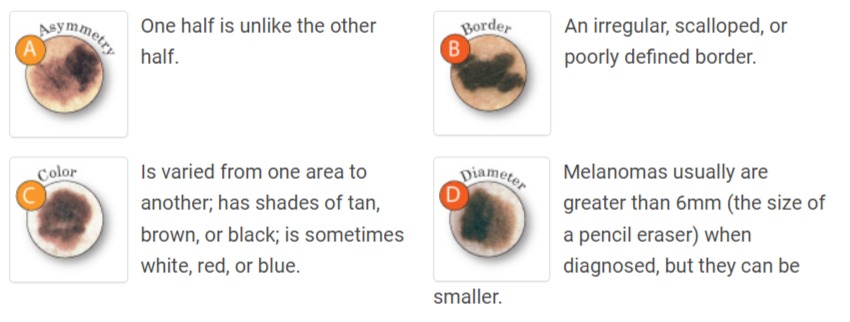
Know Your Moles: The ABCDEs of Melanoma
Melanoma can appear suddenly without warning, or it can begin in or near an existing mole. Know the size and location of your moles so you’ll recognize changes, and watch for:
- Asymmetry – one half doesn’t match the other
- Border – irregular, ragged, or blurred edges
- Color – multiple shades or uneven color
- Diameter – larger than a pencil eraser
- Evolving – any change in size, shape, color, or symptoms
Risk Factors for Melanoma
Melanoma is usually linked to sun exposure, especially intense, blistering sunburns, but it can develop at any age and anywhere on the body, including areas rarely exposed to the sun. Your risk is higher if you have fair skin, many moles or unusual moles, a personal or family history of melanoma, a history of severe sunburns, or a history of tanning bed use.
Diagnosis and Treatment
Any suspicious mole is biopsied in our office and examined under the microscope to confirm a diagnosis. Early melanomas are typically treated with surgical removal of the lesion and a margin of surrounding healthy skin, performed in our office under local anesthesia. If a melanoma is more advanced, we coordinate your care with oncology specialists for additional evaluation and treatment.
Protect Yourself With Regular Skin Exams
We recommend at least one total body skin cancer screening each year, more often if you are at higher risk, along with monthly self-exams. Daily sunscreen, protective clothing, and avoiding tanning beds all reduce your risk. Learn more about our skin cancer services and Mohs surgery.
Melanoma FAQs
What is melanoma?
Melanoma is a skin cancer that begins in melanocytes, the pigment-producing cells of the skin. It is the most serious type of skin cancer because it can spread to other parts of the body.
What are the warning signs of melanoma?
Watch for the ABCDEs: asymmetry, irregular borders, multiple colors, a diameter larger than a pencil eraser, and any mole that is evolving or changing.
Is melanoma curable?
Yes. Melanoma is highly curable when detected and treated early, which is why regular skin exams are so important.
Can melanoma appear where the sun doesn’t shine?
Yes. Melanoma can develop anywhere on the body, including areas that are rarely exposed to the sun.
Who is at risk for melanoma?
Risk is higher for people with fair skin, many or unusual moles, a personal or family history of melanoma, severe sunburns, or tanning bed use.
How is melanoma diagnosed?
A suspicious mole is biopsied and examined under a microscope to confirm whether it is melanoma.
How often should I have my moles checked?
Most people benefit from an annual professional skin exam, with more frequent checks for those at higher risk, plus monthly self-exams.
Have a Mole That’s Changing?
Don’t wait. Schedule a skin exam at Aesthetic Dermatology And Skin Cancer, Inc.. Call (415) 383-5475 or request an appointment online today.